Thursday, 2 July 2015

Vembanad


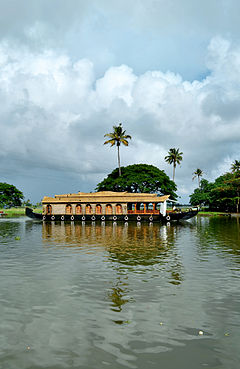
House Boat DSW.jpg

Vembanad (Vembanad Kayal or Vembanad Kol) is the longest lake in India, and the largest lake in the state of Kerala. It is also counted as one of the largest lakes in India. Spanning several districts in the state of Kerala, it is known as Punnamada Lake in Kuttanad, Kochi Lake in Kochi. Several groups of small islands including Vypin, Mulavukad, Vallarpadam, Willingdon Island are located in the Kochi Lake portion. Kochi Port is built around the Willingdon Island, and the Vallarpadam island.

The Nehru Trophy Boat Race is conducted in a portion of the lake. High levels of pollution have been noticed at certain hotspots of the Vembanad backwaters. Government of India has identified the Vembanad wetland under National Wetlands Conservation Programme.

Geography and hydrography
Location in Kerala

The Vembanad wetland system covers an area of over 2033.02 km²  thereby making it the largest wetland system in India. Of this, an area of 398.12 km² is located below the MSL and a total of 763.23 km² area is located below 1 m MSL. The lake is bordered by Alappuzha, Kottayam, and Ernakulam districts. It is situated at the sea level, and is separated from the Arabian Sea by a narrow barrier island. Canals link the lake to other coastal lakes in the north and south. The lake surrounds the islands of Pathiramanal, Perumbalam and Pallippuram. The Vembanad Lake is approximately 14 kilometres wide at its widest point. The lake is a part of Vembanad-Kol wetland system which extends from Alappuzha in the south to Azheekkode in the north, making it by far, India's longest lake at just over 96.5 km in length. The lake is fed by 10 rivers flowing into it including the six major rivers of central Kerala namely the Achenkovil, Manimala, Meenachil, Muvattupuzha, Pamba and Periyar. The total area drained by the lake is 15,770 km², which accounts for 40% of the area of Kerala. Its annual surface runoff of 21,900 Mm accounts for almost 30% of the total surface water resource of the state.

The lake has become a major tourist location in the past few years[when?] thanks to its scenic beauty. The most popular location on the shores of the lake is the Kumarakom Tourist Village situated on the east coast of the lake. The Kumarakom Bird Sanctuary is located on the northern fringes of Kumarakom village. The Vembanad Wetland system was included in the list of wetlands of international importance, as defined by the Ramsar Convention for the conservation and sustainable utilization of wetlands in 2002. It is the largest of the three Ramsar Sites in the state of Kerala. Vembanad lake has been heavily reclaimed over the course of the past century with the water spread area reducing from 290.85 km² in 1917 to 227 km² in 1971 and 213.28 km² in 1990. In the same period almost 63.62 km of erstwhile water spread were reclaimed primarily for formation of polders and to enlarge the extent of the Wellington island of Cochin port. The lake faces a major ecological crisis and has reduced to 37 per cent of its original area, as a result of land reclamation.

A unique characteristic of the lake is the 1,252 metres (4,108 ft)-long Thanneermukkom salt water barrier constructed as a part of the Kuttanad Development Scheme to prevent tidal action and intrusion of salt water into the Kuttanad low-lands. It is the largest mud regulator in India and essentially divides the lake into two parts - one with perennial brackish water and the other with fresh water from rivers draining into the lake. This barrier has helped farmers in Kuttanad by freeing the area of salinity and allowing them an additional crop in the dry season. The Thanneermukkom barrier is located at one of the narrower parts of the Vembanad Lake. Only two-thirds of the original number of gates are opened in July to release flood flow. These gates remain closed until mid-November. The main drawback of the structure has been the loss of opportunity for fish and prawns to migrate upstream, and also an increase in weed growth in the upstream, severely restricting the natural flushing of pollutants. The Thanneermukkom bund has also created ecological problems, primarily, the rampant propagation of the Water Hyacinth in fresh water.

Cities

Over 1.6 million people live on the banks of the Vembanad lake and are directly or indirectly dependent on it for their livelihoods.

The port of Kochi (Cochin) is located at the lake's outlet to the Arabian Sea. The town of Alappuzha (also known as Allepey), sometimes called the "Venice of the East" for its large network of canals that meander through the town - is sandwiched between the lake and the Arabian sea.

Tourism

Vembanad Lake is at the heart of Kerala Backwaters tourism with hundreds of kettuvallams plied on it and numerous resorts on its banks. The Kumarakom Bird Sanctuary is located on the east coast of the lake. The lake has become a major tourist attraction. A generally safe destination, this place was maligned with one incident of tourist harassment in 2004 was reported in The Times of India.

Inland transport

The Vembanad Wetland system has formed an intricate network of estuaries, lagoons and canals which spans over 196 km in the north-south and 29 km in the east-west directions. Almost all villages in these areas can be accessed via water transport. The major rivers of Muvattupuzha, Meenachil, Pamba and Achencovil rivers, are all navigable up to distances of about 30 km upstream in the tidal reach. The Kottappuram-Kollam segment of the west coast canal system has a major chunk passing through the Vembanad Lake and spans a total of 209 km. It has been declared as a National Waterway.

Ecological importance

Vembanad Kol Wetland was included in the list of wetlands of international importance, as defined by the Ramsar Convention for the conservation and sustainable utilization of wetlands.[7] It is home to more than 20,000 waterfowls - the third largest such population in India. It is also an ideal habitat for shrimps.[8] Major livelihood activities of the people living on the shores of the lake include agriculture, fishing, tourism, inland navigation, coir retting, lime shell collection. The uncontrolled mining of shells from the lake bed is also posing a threat to the eco-system. The sewage effluents and the heavy load of organic material released from the neighboring areas including a medical college at Alappuzha is let into the water and are responsible for the decrease in dissolved oxygen content in the water in the water body.

Boat capsize

On July 27, 2002, twenty-nine people were killed when an overcrowded boat capsized in the Vembanad lake. The boat was carrying more people than twice its slated capacity. The boat was a daily ferry service which connects Muhamma village on the west coast to Kumarakom on the east. The crowd were going in for writing a Public Service Commission test which is conducted by government of kerala

Chembra Peak


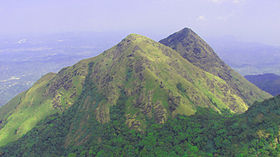
Chembra.jpg

Chembra Peak (Malayalam: ചെമ്പ്ര കൊടുമുടി) is the highest peak in Wayanad, at 2,100 m (6,900 ft) above sea level. Chembra is located near the town of Meppady and is 8 km (5 mi) south of Kalpetta. It is part of the Wayanad hill ranges in Western Ghats, adjoining the Nilgiri Hills in Tamil Nadu and Vellarimala in Kozhikode district in Kerala. Chembra Peak is accessible by foot from Meppady. District Tourism Promotion Council provides guides and trekking equipment on hire charges to tourists.

Permission from the forest office in Meppady is required for trekking up to Chembra Peak. A heart shaped lake on the way to the top of the peak is a major tourist attraction. The lake is believed to have never dried up. You can find the lake halfway to the peak, after getting to the lake need to trek through about a km or two of dense trees. A 5 km (3 mi) journey from Meppadi town through tea estates to Erumakkolli.

Transportation

One can reach the forest office, from where a pass has to be acquired to trek the mountain. Also services of a guide can be availed, which might be very useful. The trek to the top takes 3 hours, and one can see almost the whole of Wayanad and parts of Malappuram, Kozhikkode and Nilgiri districts.

Chembra is located in Meppadi (Meppady) Panchayath, 11 km (7 mi) off NH212 (Kollegal - Mysore - Kozhikode). For people who prefer public transport, KSRTC (both Kerala & Karnataka) and a lot of private companies operate overnight deluxe buses between Kozhikode (aka Calicut) and Bengaluru. People taking buses can get down at Kalpetta and catch another bus to Meppadi. Meppadi is 11 km from Chundale, in the SH29, connecting Chundale to Ooty.

Mattancherry Palace


Kerala Dutch Palace1.JPG

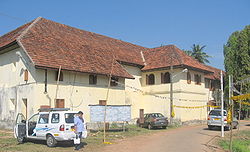
The Mattancherry Palace is a Portuguese palace popularly known as the Dutch Palace, in Mattancherry, Kochi, in the Indian state of Kerala features Kerala murals depicting Hindu temple art, portraits and exhibits of the Rajas of Kochi.

History

The Palace was built and gifted by the Portuguese as a present to the Raja of Cochin around 1555. The Dutch carried out some extensions and renovations in the palace in 1663, and thereafter it was popularly called Dutch Palace. The rajas also made more improvements to it. Today, it is a portrait gallery of the Cochin Rajas and notable for some of the best mythological murals in India, which are in the best traditions of Hindu temple art. The palace was built to appease the king after they plundered a temple nearby.

The landing of Vasco da Gama, the Portuguese explorer at Kappad in 1498 was welcomed by the Kochi rulers. They were given exclusive right to construct factories. The Portuguese repulsed the repeated attacks of the Zamorins and the Cochin Rajas practically became vassals of the Portuguese. The influence of the Portuguese were supplanted by the Dutch and they took over Mattancherry in 1663. Subsequently, the area was taken over by Hyder Ali and still later by the British East India Company.

The Palace

The palace is a quadrangular structure built in Nālukettu style, the traditional Kerala style of architecture, with a courtyard in the middle. In the courtyard there stands a small temple dedicated to 'Pazhayannur Bhagavati', the protective goddess of the Kochi royal family. There are two more temples on either side of the Palace, one dedicated to Lord Krishna and the other to Lord Siva. Certain elements of architecture, as for example the nature of its arches and the proportion of its chambers are indicative of European influence in basic Nāluketttu style.

The Dining Hall has carved wooden ornate ceiling decorated with a series of brass cups. The palace also contains rare examples of traditional Kerala flooring, which looks like polished black marble but is actually a mixture of burned coconut shells, charcoal, lime, plant juices and egg whites.

Murals
Several murals depicting Hindu religious art adorn the walls of the Palace.

The glory of the palace rests on the large number of murals, executed in the best traditions of Hindu temple art, which are religious, decorative and stylised. The murals have been painted in rich warm colours in tempera technique.

The king's bedchamber or Palliyara, to the left of the entrance and occupying the southwest corner of the Palace, is noteworthy with its low wooden ceiling and 300 sq ft (28 m2) of wall surface covered with about 48 paintings. These illustrate the Ramayana, from the beginning of the sacrifice of Dasaratha to Sita's return from captivity in Lanka. The paintings in this section are the earliest in the palace, dating back to the 16th century. The last five scenes are from the 'Krishna Lila' where in a cheerful God Krishna using his six hands and two feet to engage in foreplay with eight happy milkmaids. The paintings are attributed to the artistic bent of mind of Veera Kerala Verma.

The upper staircase rooms, notably that of the coronation hall that was extended under Dutch patronage, contain some murals. The notable compositions in this section are - Lakshmi seated on the lotus, sleeping Vishnu (Ananthasayanamurti), Shiva and Parvati seated with Ardhanariswara and other goddesses, the coronation of Rama, and Krishna lifting Mount Govardhana.

On the opposite side of the coronation hall is the staircase room or Kovinithalam (Room No II), with a descent to the lower storey, there are four paintings of Shiva, Vishnu and Devi, and one incomplete. Room No. IV depict scenes from Kumarasambhava and other works of the great Sanskrit poet Kālidāsa. The latter set of paintings belong to the eighteenth century.

Other exhibits

Portraits of the Rajas of Cochin, from 1864 onwards, are displayed in what was once the Coronation Hall. These were painted by local artists in western style. The ceiling of the hall is decorated with floral designs in wood craft.

Amongst the other exhibits in the palace are an ivory palanquin, a howdah, royal umbrellas, ceremonial dress used by the royalty, coins, stamps and drawings. .

Restoration

In 1951, Mattancherry Palace was restored and declared a centrally protected monument. The palace is already undergoing a second restoration by the Archaeological Survey of India. The restoration will raise the historical structure to a building and a museum of an international standard, preserving its originality, yet highlighting the important facets, The palace is an architectural masterpiece showcasing the blend between colonial and Kerala architecture. The restoration aims at showcasing its true grandeur. The work which started in 2007 is scheduled to be completed by 2009.

Nearby

Nearby is the Paradesi Synagogue built in 1568. Alongside are the antique shops in the meandering alleys of Jew Town, most of whose inhabitants have since migrated to Israel. The Mattancherry jetty and bus stand are behind the Palace. The area is full of shops attracting tourists hunting for mementoes to carry back home.

Situated in between the Mattancherry Palace and the Paradesi Synagogue is the Pazhayannur Bhagavathy Temple, the ancestral deity or Paradevata of the Cochin Royal Family. The temple with royal patronage which shares its wall with the Jewish synagogue tells volumes about the religious tolerance and inter cultural amity that existed during the time of the Kingdom of Cochin.

References: https://en.wikipedia.org/wiki/Mattancherry_Palace

Thekkady (Idukki district) Tourst Place Kerala


 A boat cruise on Periyar Lake

Thekkady (Idukki district) is the location of the Periyar National Park, which is an important tourist  destination in the Kerala state of India

Overview
Thekkady is located about 257 km (160 mi) from Trivandrum, 114 km from Madurai City and Madurai Airport, 145 km from Cochin International Airport and 114 km from Kottayam railway station. Thekkady is located near to Kerala-Tamil Nadu border. The sanctuary is famous for its dense evergreen, semi-evergreen, moist deciduous forests and savanna grass lands. It is home to herds of elephants, sambar, tigers, gaur, lion-tailed Macaques and Nilgiri Langurs.

The Periyar Wildlife Sanctuary is spread across 777 km2 (300 sq mi), of which 360 km2 (140 sq mi) is thick evergreen forest. The Wild Life Sanctuary was declared a Tiger Reserve in 1978. The splendid artificial lake formed by the Mullaperiyar Dam across the Periyar River adds to the charm of the park. The greatest attractions of Periyar are the herds of wild elephants, deers, bisons that come down to drink in the lake. Sanctuary can be accessed through a trekking, boating or jeep safari.

Thekkady is considered as a heaven for natural spices such as black pepper, cardamom, cinnamon, nutmeg, nutmace, ginger, and clove.

Nearby Places of interest
Murikkady
This place consists of spices and coffee plantations. It is about 5 km from Thekkady.

Chellar Kovil
This is located about 15 km from Kumily en route to the Theni district of Tamil Nadu. This place has a lot of picturesque waterfalls and cascades.
 
Anakkara
Located at about 13 km from Kumily on the Kumily-Munnar road. A new airport is proposed at Anakkara and is under review by the Airports Authority of India.

Mangala Devi Temple
It is situated about 15 km from Thekkady at an altitude of 1337 m above sea level. It is surrounded by lush greenery and is closed throughout the year except during the Chitra Pournami festival. At other times tourists can still visit it by getting a special letter from the forest ranger. The view from the temple premises is spectacular and one can see part of eastern ghats and some villages from adjacent state of Tamil Nadu.